Roof repair
Roof repair, with photos of the problem first
Most leaks start small: a lifted ridge cap, a cracked pipe boot, a gap in the flashing. We find it, show you, and fix it.
- 5.0 from 58 Google reviews
- GAF Certified™
- Class A licensed in Virginia
Most roof leaks come from a handful of places: a wind-lifted ridge cap, a failed pipe boot, flashing that has pulled away from a chimney or wall, or shingles that lost their granules after hail. We inspect for free, photograph what we find, and recommend a repair when a repair will do the job.
- Inspection
- Free, with photos
- Same day
- Sometimes, for small repairs
- Our approach
- Repair first when it will hold
What we fix most
- Wind-lifted or missing shingles and ridge caps. Virginia’s afternoon thunderstorms lift tabs that never sealed down properly.
- Pipe boot flashing. The rubber collar around plumbing vents cracks in the sun and starts letting water down the pipe.
- Chimney and wall flashing. A slow leak tracking down a chimney chase is a classic: the stain shows up on a ceiling a few feet away from the real problem.
- Hail and granule loss. Bare spots where the granules are gone age quickly and let water through.
- Valleys. Where two roof planes meet, water concentrates. Worn valleys are a common leak point.
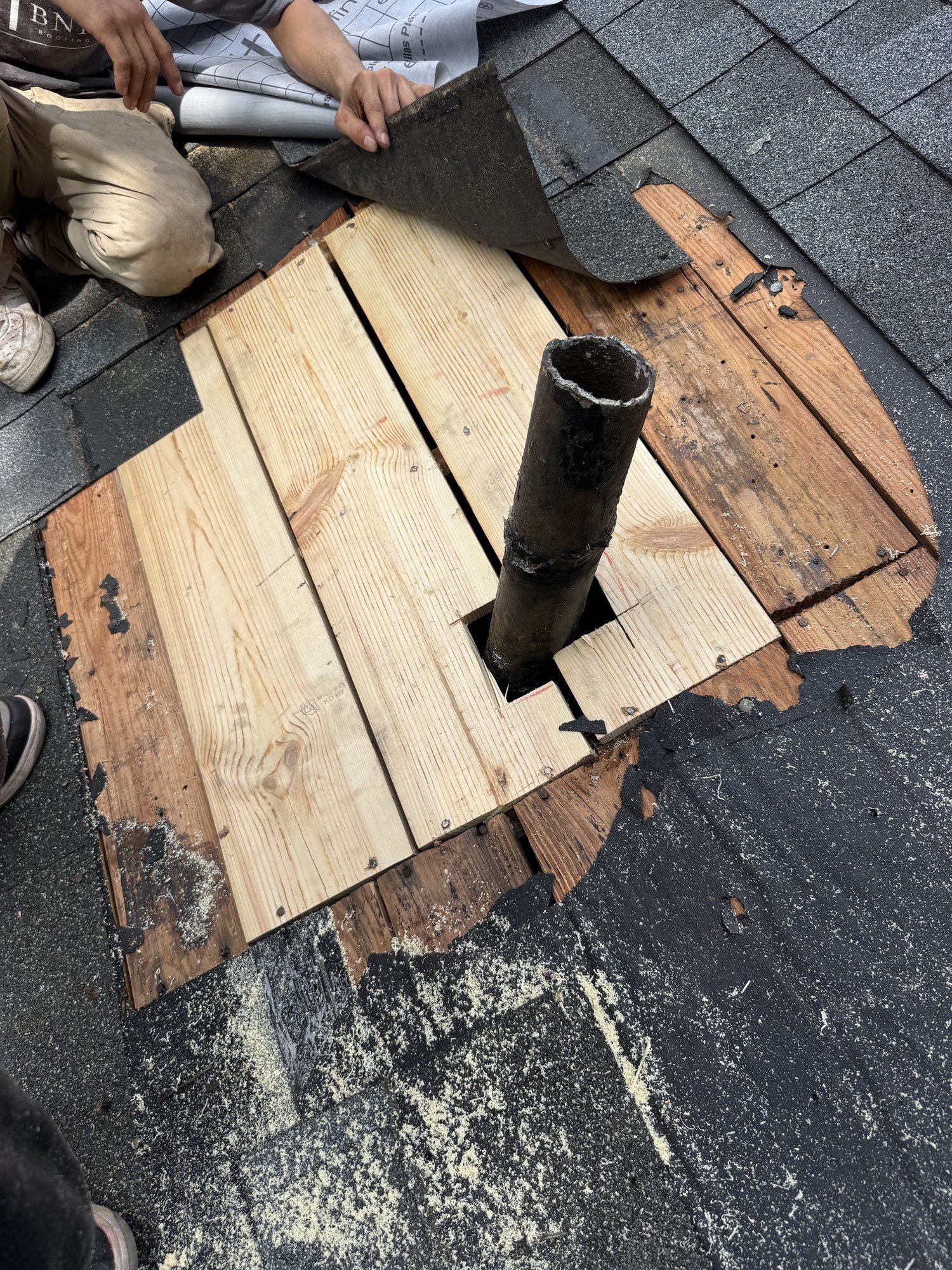
Rot around a vent pipe, cut out and rebuilt 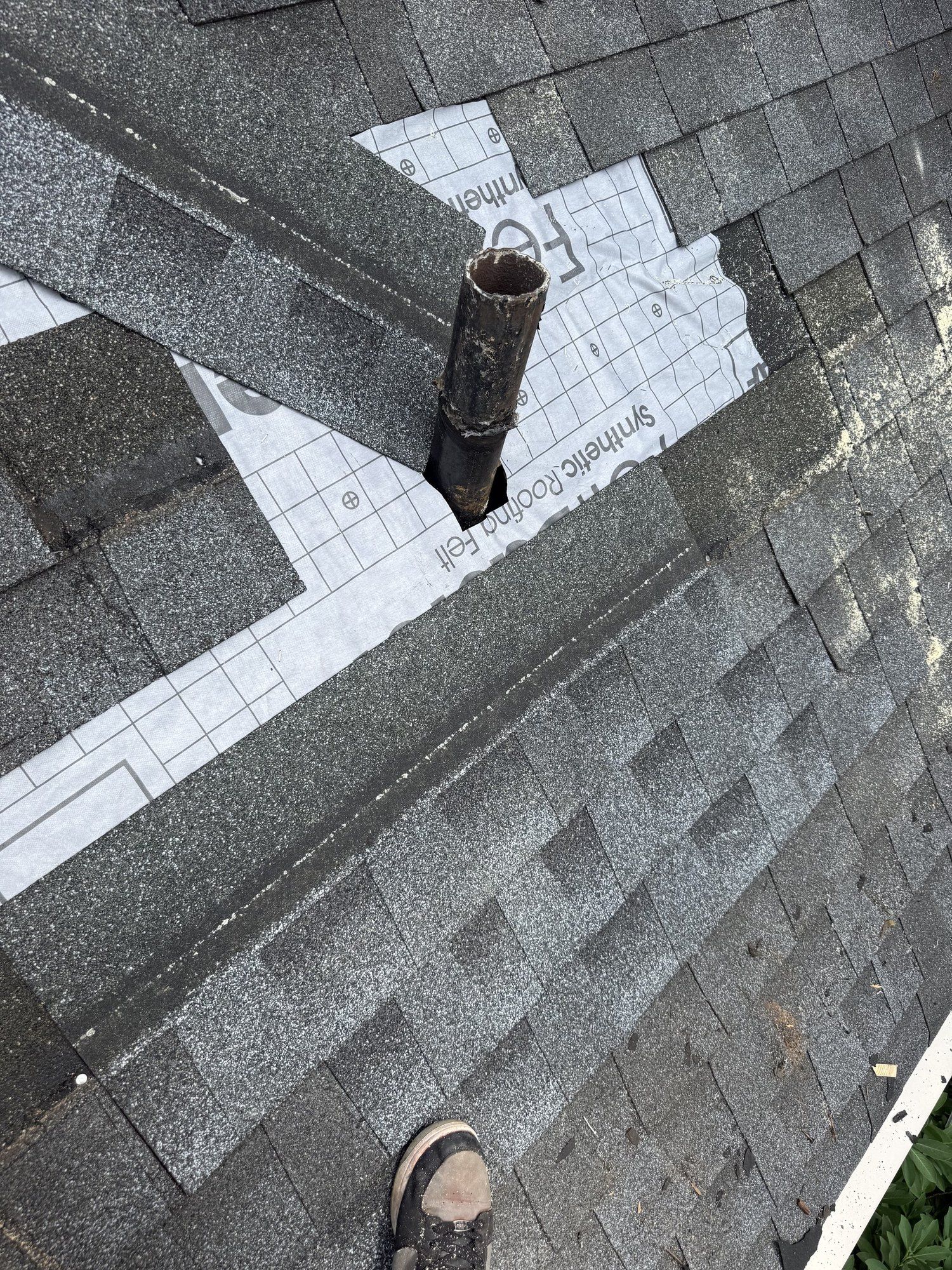
The same vent sealed with ice and water shield before shingles 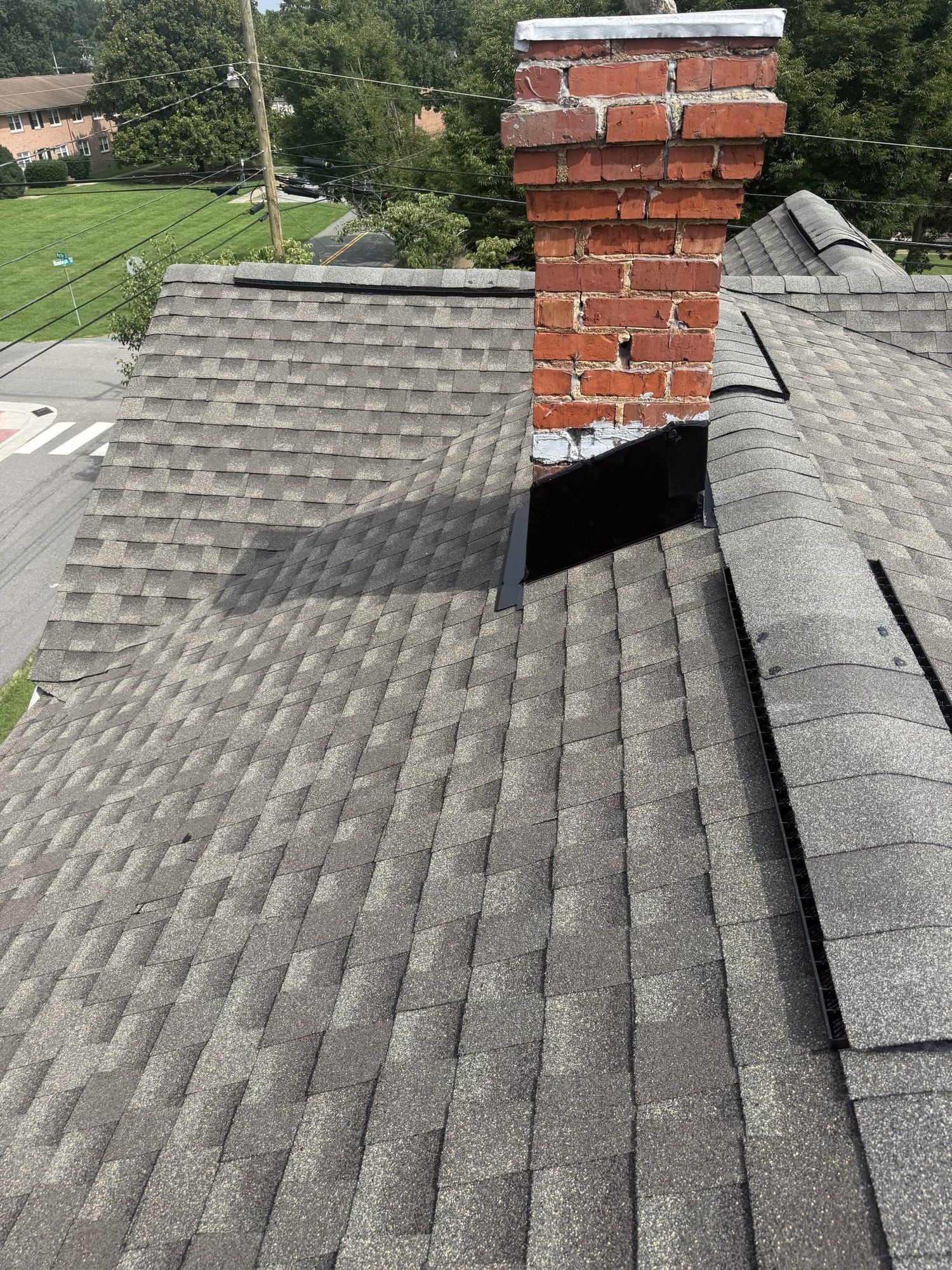
New chimney flashing, where a lot of leaks start 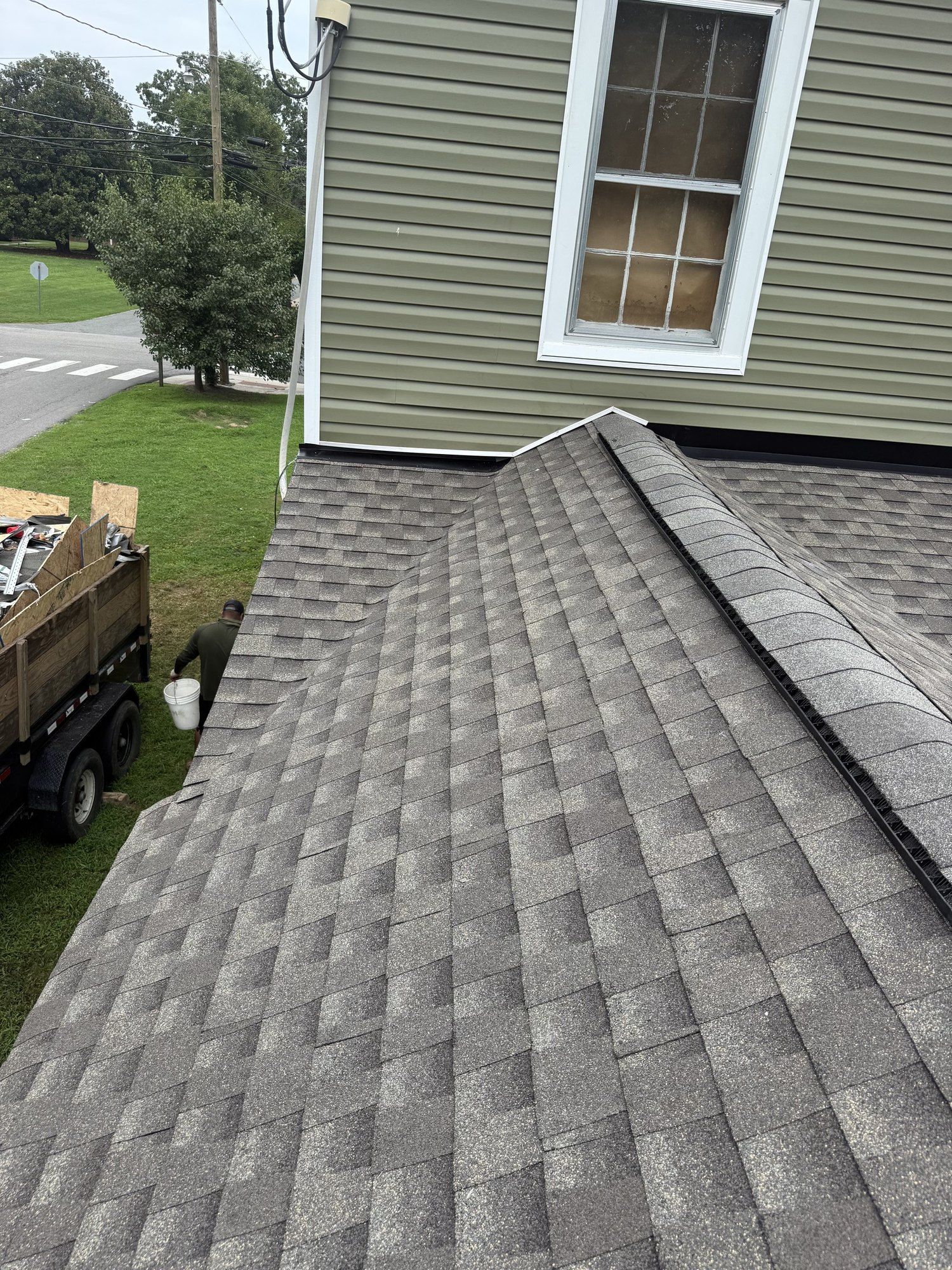
Roof-to-wall joint with new step flashing
How a repair visit works
- Houston inspects the roof and photographs what he finds.
- He shows you the photos and explains what’s wrong in plain English.
- You get a price for the repair. If the roof is past the point where repairs make sense, he’ll show you why and price a replacement too, so you can compare.
When a repair isn’t the right call
If the shingles are near the end of their life, patching one leak often just moves it. Widespread granule loss, curling or brittle shingles, or several leak points at once usually mean replacement is the better spend. How to tell the difference.
Freeze, thaw, repeat
Central Virginia winters swing above and below freezing. Water that gets under a lifted shingle freezes, expands and loosens seams and fasteners a little more each cycle, so a small problem in the fall is a bigger one by spring. Annual inspections catch these while they’re still repairs.
Questions
Common questions
Will you tell me if I only need a repair?
Yes. If a repair will do the job, that’s what we recommend. You’ll see photos of the problem either way.
Can you match my existing shingles?
We get as close as we can. Older shingles fade and some colors are discontinued, so Houston tells you before any work starts if an exact match isn’t available.
My roof is leaking right now. What should I do?
Move anything valuable away from the drip, catch the water, take a few photos, and call us at 804-604-6316. Please don’t climb onto a wet roof.
Can you fix it the same day?
Sometimes. When it’s a small repair and the materials are on the truck, Houston can occasionally take care of it the same day he looks at it. Bigger repairs get scheduled.
Is the inspection free?
Yes. We look, photograph what we find, and tell you what it needs. No charge and no obligation.

Houston Kincaid
President
Got a leak or a spot you’re worried about? Let’s find it.
Houston finds the problem, shows you photos and prices the repair. If a repair won’t hold, he’ll show you why. It’s free, and there’s no obligation.